
- Home
- Heating
Heating
Heating Service for Indianapolis Area Homes
Furnace repair, replacement and tune-ups from union certified technicians. You get the service you need at a fair price, with no upsells or price manipulation.
How a Heating Call Works with Us
When your furnace quits in January, you want two things: heat back, and a straight answer about what it will cost. A Johnson-Melloh Residential technician diagnoses the problem first, then explains what failed, the condition of the rest of the system, and your options with the price of each.
The diagnostic visit covers the technician's time to find the cause and explain your options. Nothing else moves forward until you approve it. If a repair makes more sense than a new furnace, we say so. How our diagnostic fee works.
Anything unsafe or keeping your system from working. You get the price first, and nothing starts until you say yes.
Parts that are wearing out but still working. We tell you what it will cost so you can plan for it.
Things worth keeping an eye on. We note them on your service record so nothing surprises you later.
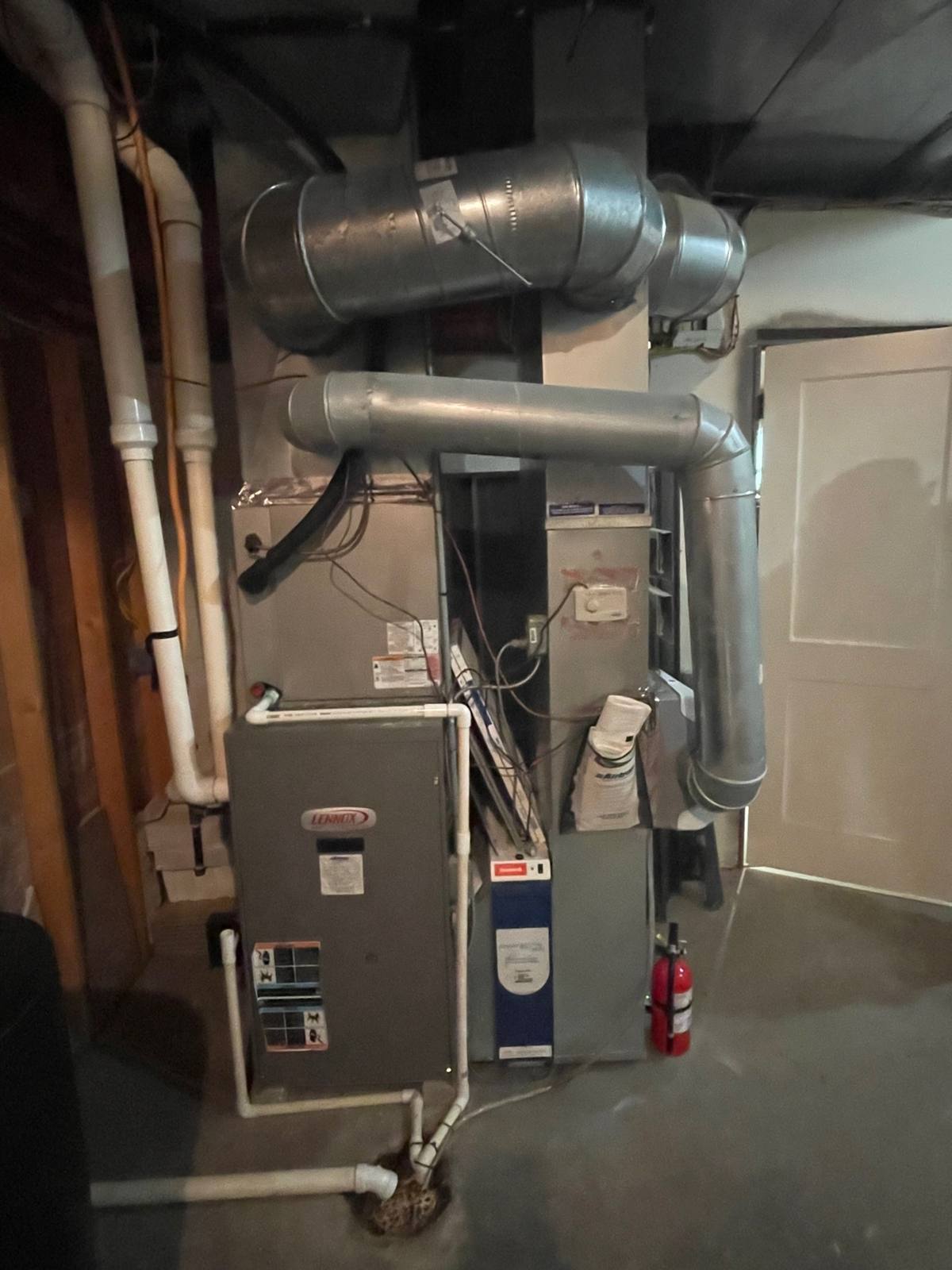
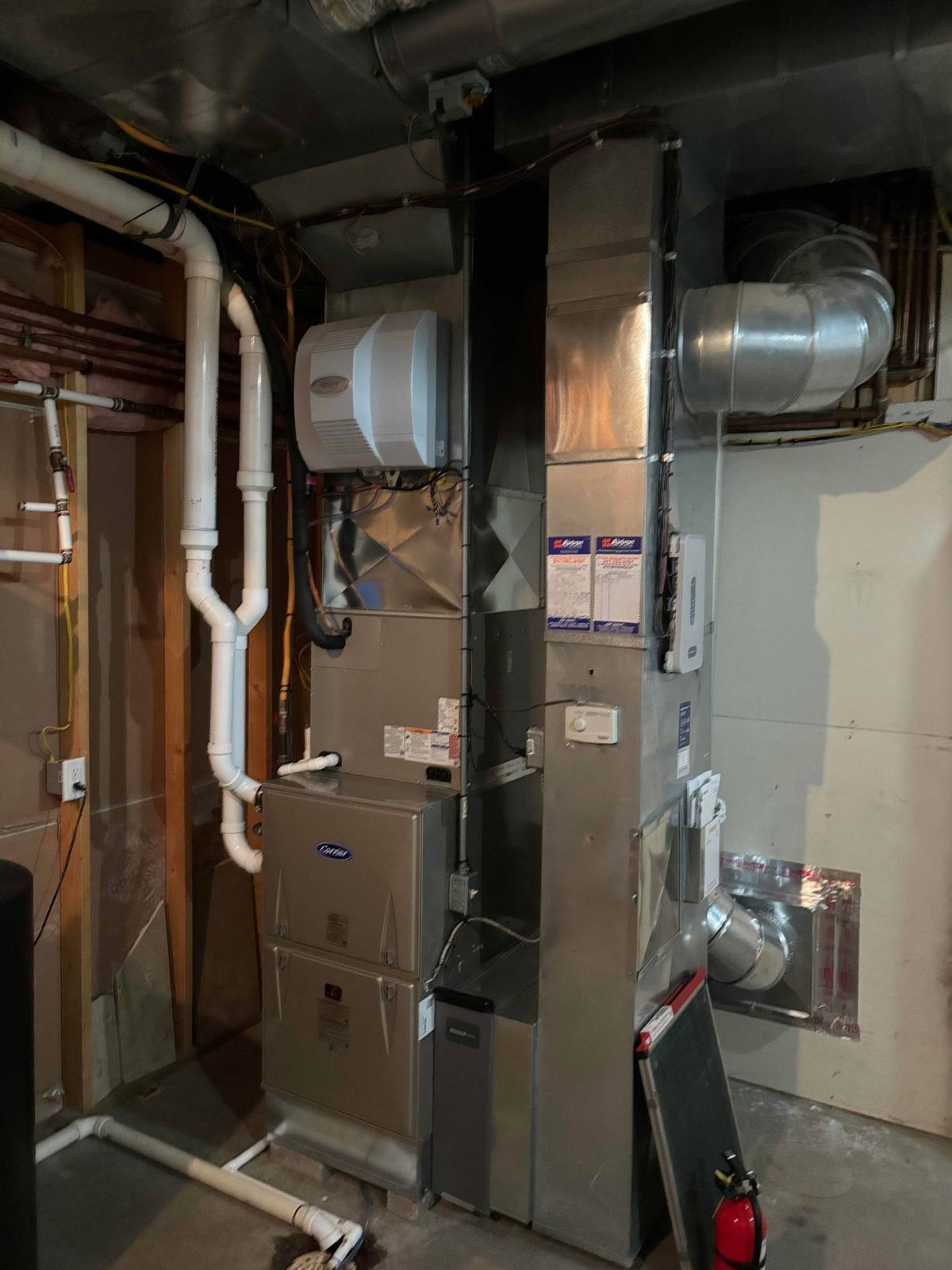
Before and After: A Recent Furnace Replacement
These photos come from a recent furnace replacement by our team. On the left, the old furnace. On the right, the new furnace in the same spot.
Every replacement starts with an evaluation and a quote, and nothing is scheduled until you decide. How a furnace replacement goes.
Heating Services We Provide
Most heating calls fall into one of these jobs. Each has its own page with what we check, what it usually involves and the questions homeowners ask us.
Not sure which one you need? Call (317) 891-5671 and dispatch will sort it out with you.
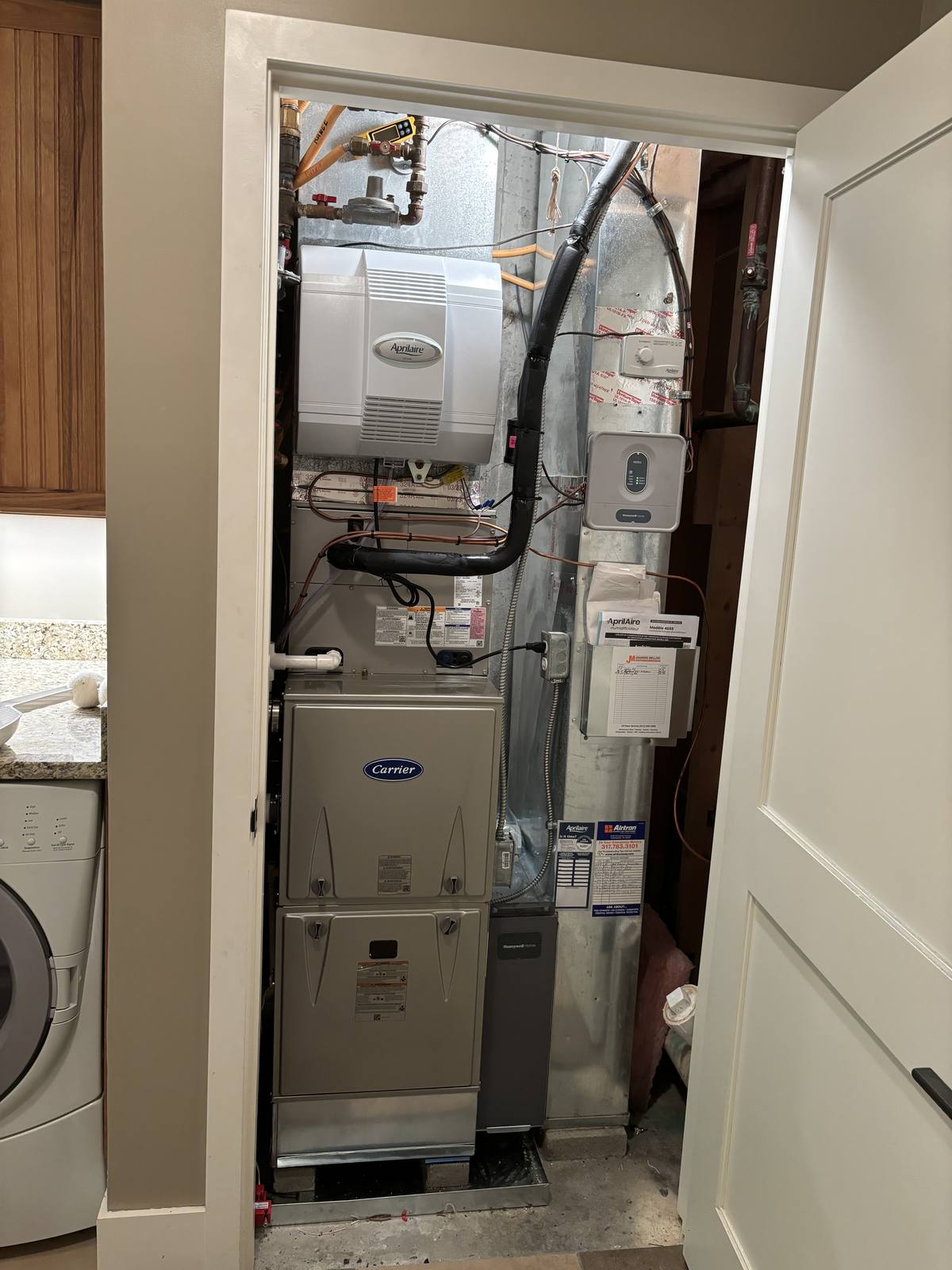
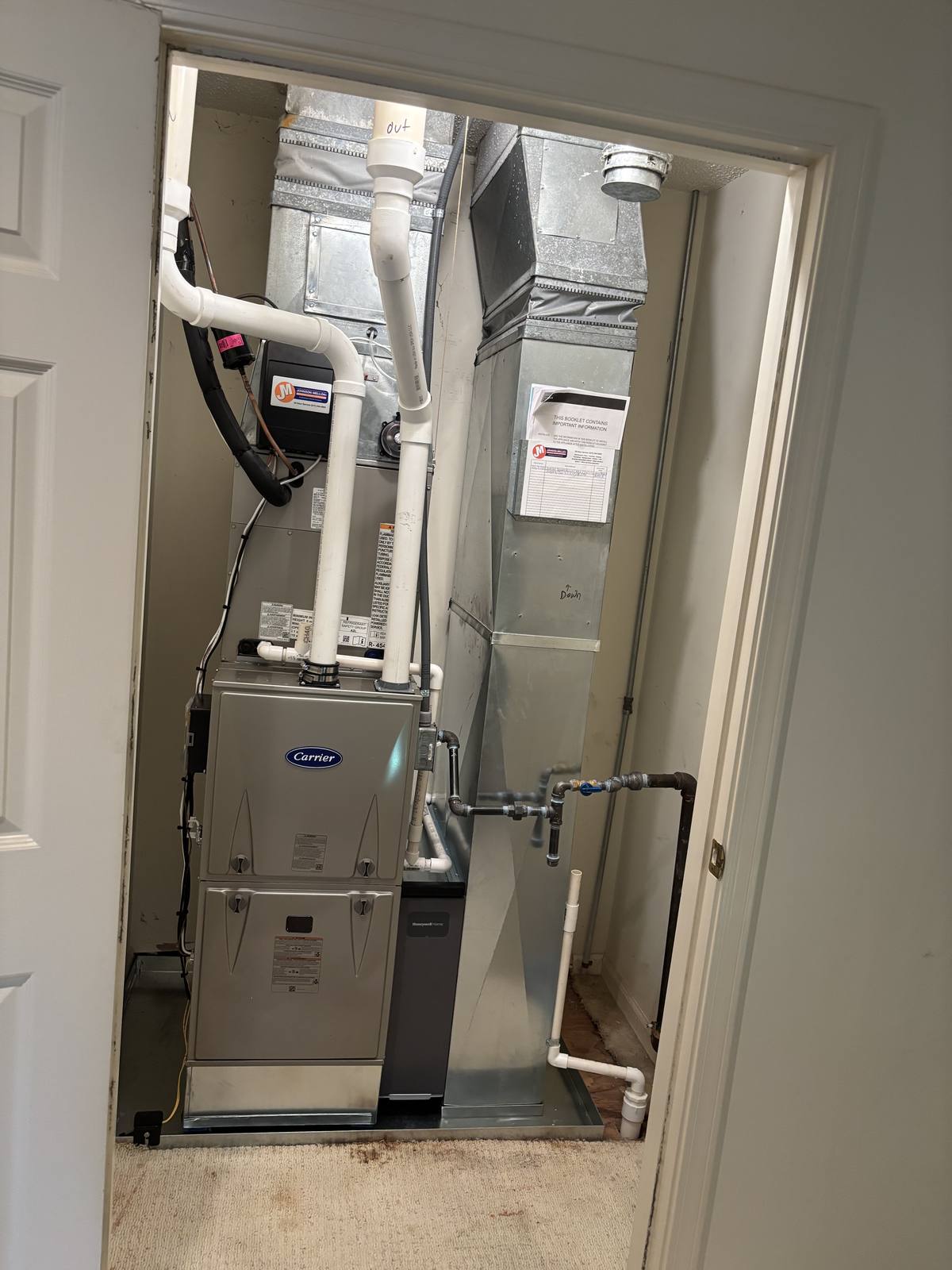
Furnaces That Fit a Closet
Not every furnace sits in a basement. These recent installations by our team fit into a laundry closet and a hallway closet, with the venting and drain lines run cleanly.
A closet installation has to leave room for service and for the filter to be changed easily. How a furnace replacement goes.
What a Heating Tune-Up Covers
Regular maintenance is the best way to avoid costly furnace repairs, but a maintenance call should never turn into a sales pitch. Our technicians verify overall heating performance and efficiency with an industry-standard inspection, testing and cleaning on a regular schedule.
Fuel-burning equipment deserves a yearly look before the first cold night in Indiana. The U.S. Consumer Product Safety Commission recommends a yearly professional inspection of furnaces and a carbon monoxide alarm near sleeping areas, and our checklist covers combustion and carbon monoxide testing.
Inspect and Clean
- Burners
- Internal components
- Electrical connections
- Safety controls
Test
- Gas pressure
- Combustion
- Carbon monoxide levels
Check
- Thermostat calibration
- Heat exchanger
- Blower motor operation
- Airflow
Replace
- Dirty air filters
- Worn components, as needed and requested
Questions Homeowners Ask Us
Still have a question? Call dispatch.
(317) 891-5671Monday to Friday, 7:30 AM to 4 PM
How can my heating system run more efficiently?
Basic maintenance, upgraded controls and sealing your home against heat loss all help. If your furnace is more than fifteen years old, a new unit could cut your annual heating gas use by up to 20 percent, depending on the efficiency rating of the unit you have now.
What does AFUE mean for a furnace?
AFUE stands for Annual Fuel Utilization Efficiency. It measures how much of the fuel a furnace burns becomes heat in your home. A furnace rated 95 percent AFUE turns 95 percent of its fuel into heat and wastes about 5 percent. Older furnaces often run around 60 percent AFUE, while new high-efficiency models run about 90 to 97 percent, according to Citizens Energy Group's guide to repairing or replacing a furnace.
What size furnace does my house need?
The right size comes from a load calculation, not square footage alone. We look at your home's size, insulation levels, ductwork and the local climate. A furnace that is too large short-cycles; one that is too small runs constantly in a cold snap.
Why are some rooms hot and others cold?
Usually restricted airflow, leaky ductwork, poor insulation or a system that is the wrong size. The fixes range from simple and cheap to complex and expensive, and we will tell you which one you are looking at before you spend anything.
Keep Reading
Tell Us What Is Going on at Home
Call (317) 891-5671 or schedule online. Dispatch will confirm a time, and a union certified technician will tell you what we found, what it needs and what it costs.